Sharenting: the childhood you post before they can say no
British parents posted about 1,500 photos of a child by their fifth birthday, and France has written children's image rights into law. How to share a childhood with care.



In short
- A 2016 UK survey found parents had posted about 1,500 photos of a child online by their fifth birthday.
- Since February 2024, French law says parents protect their child's image together, and must involve the child as they grow.
- Share with your people, not the public, leave out the details that identify a child, and ask them once they're old enough.
There’s a pavement in most towns with a child’s handprint in it. Someone pressed a small hand into the wet cement years ago, and there it still is, long after the child grew up and moved away.
Wet cement is easy to mark and hard to change once it sets. A child’s first years online work the same way.
A childhood in 1,500 photos
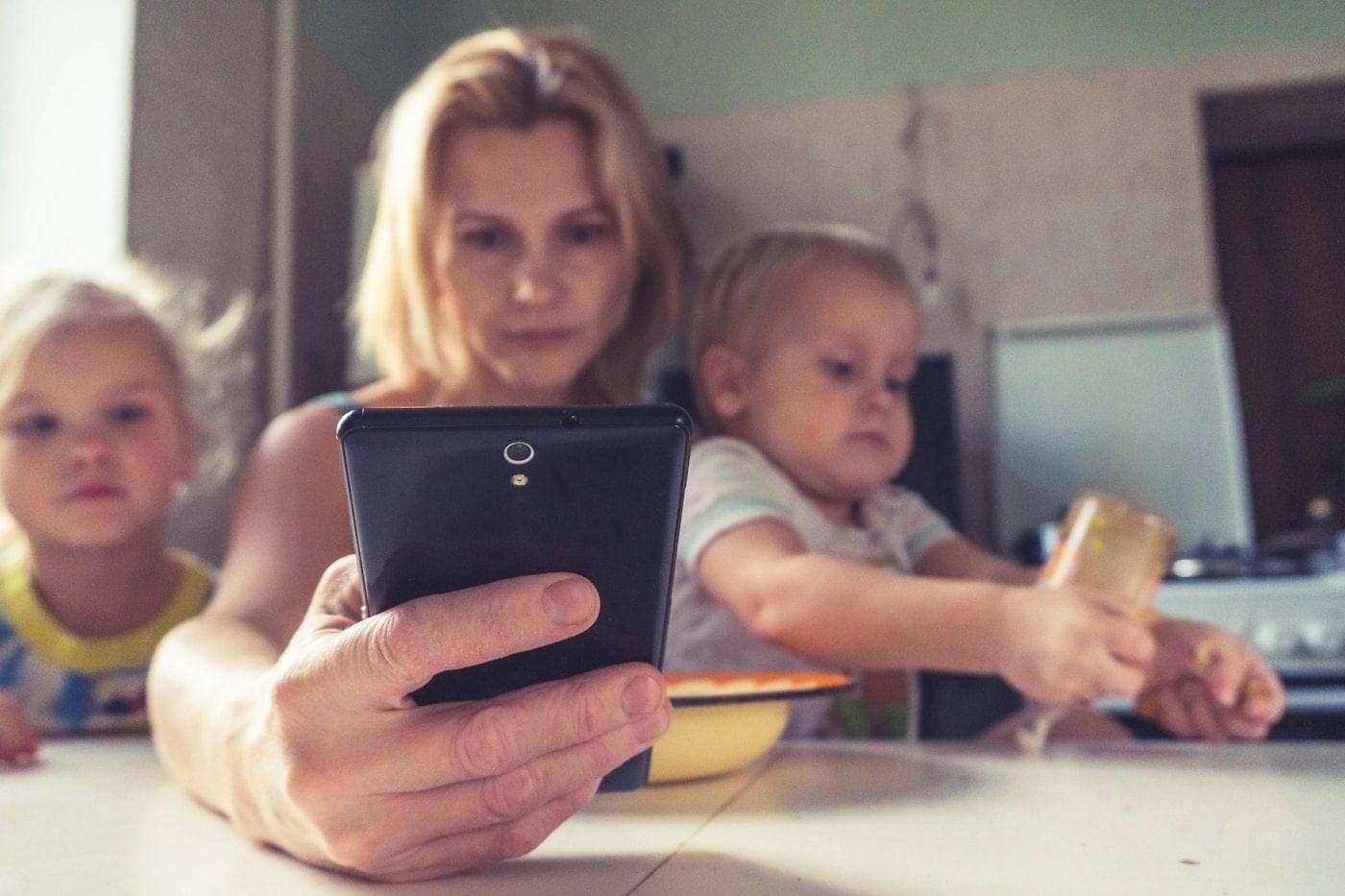
In 2016, the UK domain registry Nominet and the online safety group The Parent Zone surveyed 2,000 British parents. By a child’s fifth birthday, parents had posted around 1,500 photos of them online, up by more than half on the year before.
For many children, it starts even earlier. In a 2010 survey of mothers in ten countries by the security company AVG, 81% of children under two already had some kind of online presence, and 23% had their prenatal scans online before they were born.
None of this comes from bad intentions. We share because we’re proud, because Grandma lives in another country, because the first day of school is a big deal. The question isn’t whether to share. It’s where, and with whom.
Where the photos go
A photo posted publicly doesn’t stay where you put it. It can be screenshotted, saved and shared on by people you’ll never meet.
It can also be collected by machines. In 2024, Human Rights Watch found links to 170 personal photos of Brazilian children, and later 190 of Australian children, in LAION-5B, a dataset used to train AI image tools. Some had been posted on family blogs by their parents. We wrote about what that means for your photos.
And details add up. In 2018, the British bank Barclays predicted that by 2030, sharenting would account for two-thirds of the identity fraud facing young people. That’s a forecast, not a measurement, but the reasoning is simple: a child’s name, birthday, school and hometown, scattered across years of posts, are the pieces a fraudster needs.
What children think
Here’s the part we rarely ask about. In a 2016 study, the researchers Alexis Hiniker, Sarita Schoenebeck and Julie Kientz asked 249 American families what rules each side thought parents should follow with technology. Children were twice as likely as parents to say adults shouldn’t overshare about them.
One child’s rule was hard to argue with: “Don’t post anything about me without asking me.”
France wrote it into law
Some countries have started to agree. In February 2024, France passed a law on children’s right to their own image. It doesn’t ban parents from posting. Instead it says:
- Protecting a child’s privacy is part of a parent’s job.
- Parents protect their child’s image together, and must involve the child according to their age and maturity.
- If parents disagree, a family judge can stop one of them posting about the child without the other’s agreement.
- In serious cases, a judge can hand the child’s image rights to someone else.
The law’s backers called it a law of teaching more than punishment. Its message for every parent, French or not, is the same: a child’s image belongs, in part, to the child.
Five ways to share with care
- Share with people, not the public. A Family Circle of ten people who love your child is a different audience from the whole internet.
- Leave out the identifiers. Full name, date of birth, school, home address. Your family already knows them.
- Skip the bath and the meltdown. If you’d be mortified to have that photo of yourself online at fifteen, so will they.
- Ask, once they’re old enough. Even a five-year-old can say “not that one”. It teaches them their image is theirs.
- Look back now and then. Delete what no longer needs to be there.
How Philos helps
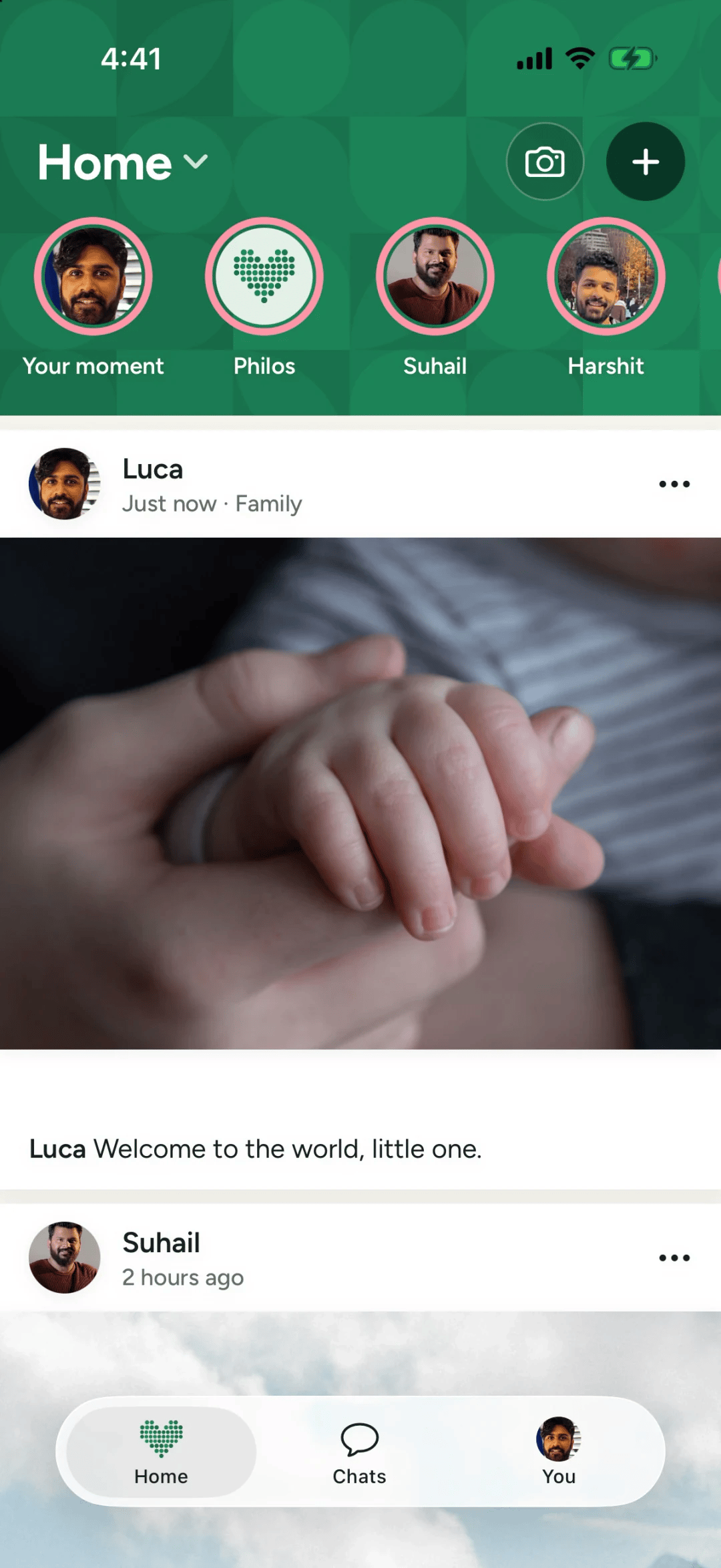
We built Philos for exactly this kind of sharing. Nothing on Philos is public. Every photo goes only to the people you choose, such as a Family Circle, and nothing can be forwarded. Philos removes location and camera details from every photo you share, and your photos are never used to train AI.
The handprint in the cement is lovely because it’s in front of a family’s own door, not in the middle of a motorway. Share your children’s first years the same way: close to home.
Questions people ask
What is sharenting?
Parents sharing photos, videos and stories about their children online. The word mixes "sharing" and "parenting".
Is it illegal to post photos of your child in France?
No. A 2024 French law says parents protect their child's image together and must involve the child according to their age and maturity. If parents disagree, a judge can stop one parent posting without the other's agreement.
How can I share photos of my children more safely?
Share them with a small group of people you know rather than publicly, leave out details like full names, birthdays and schools, and ask your children before posting once they're old enough to have a view.
Sources
- Parents oversharing family photos online but lack basic privacy know-how, Nominet
- 'Sharenting' puts young at risk of online fraud, BBC News
- Loi n° 2024-120 du 19 février 2024 visant à garantir le respect du droit à l'image des enfants, Légifrance, 19 Feb 2024
- Not at the Dinner Table: Parents' and Children's Perspectives on Family Technology Rules, Hiniker, Schoenebeck and Kientz, ACM CSCW
- Brazil: Children's Personal Photos Misused to Power AI Tools, Human Rights Watch, 10 Jun 2024