
Our thinking
Why Philos has room for only 49 people
Every dot in our logo is someone. Here's why we stopped at 49, and why nobody moves when someone leaves.

What Philos shows, to whom, and what it never does with your photos and messages.
Follow privacy with RSSEvery dot in our logo is someone. Here's why we stopped at 49, and why nobody moves when someone leaves.

A photo carries more than the picture, and public photos travel further than you think. Location data, face-search databases, AI training, and how to keep photos close.
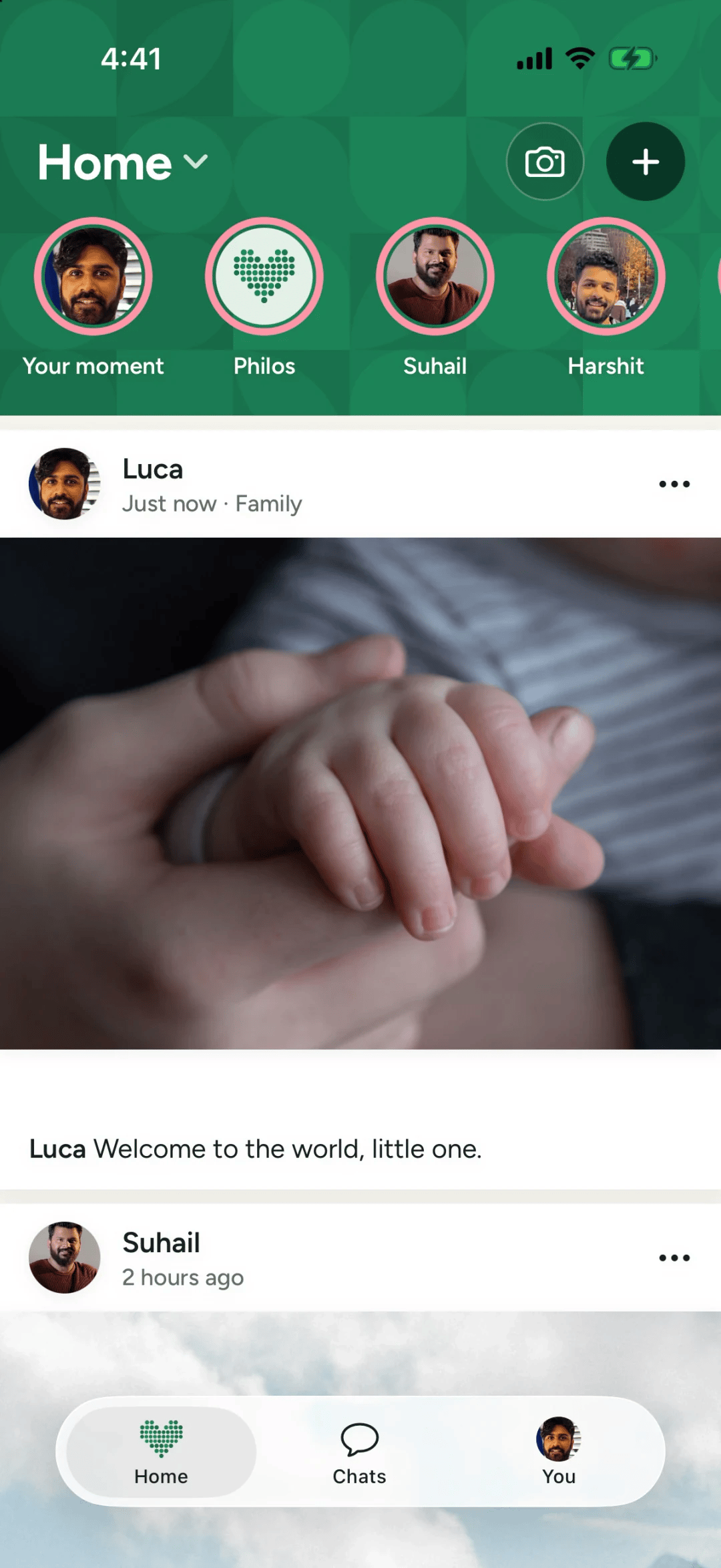
Share every first with the people who'd frame it, not with the internet. A step-by-step guide to posting baby photos on Philos.

Only you choose who sees what you share, so nothing on Philos can be passed on. Here's why we left the button out, and what it can't stop.

On Philos, nobody is tagged in a photo until they say yes. Here's how to tag someone, what they see, and how to accept, reject or remove a tag later.
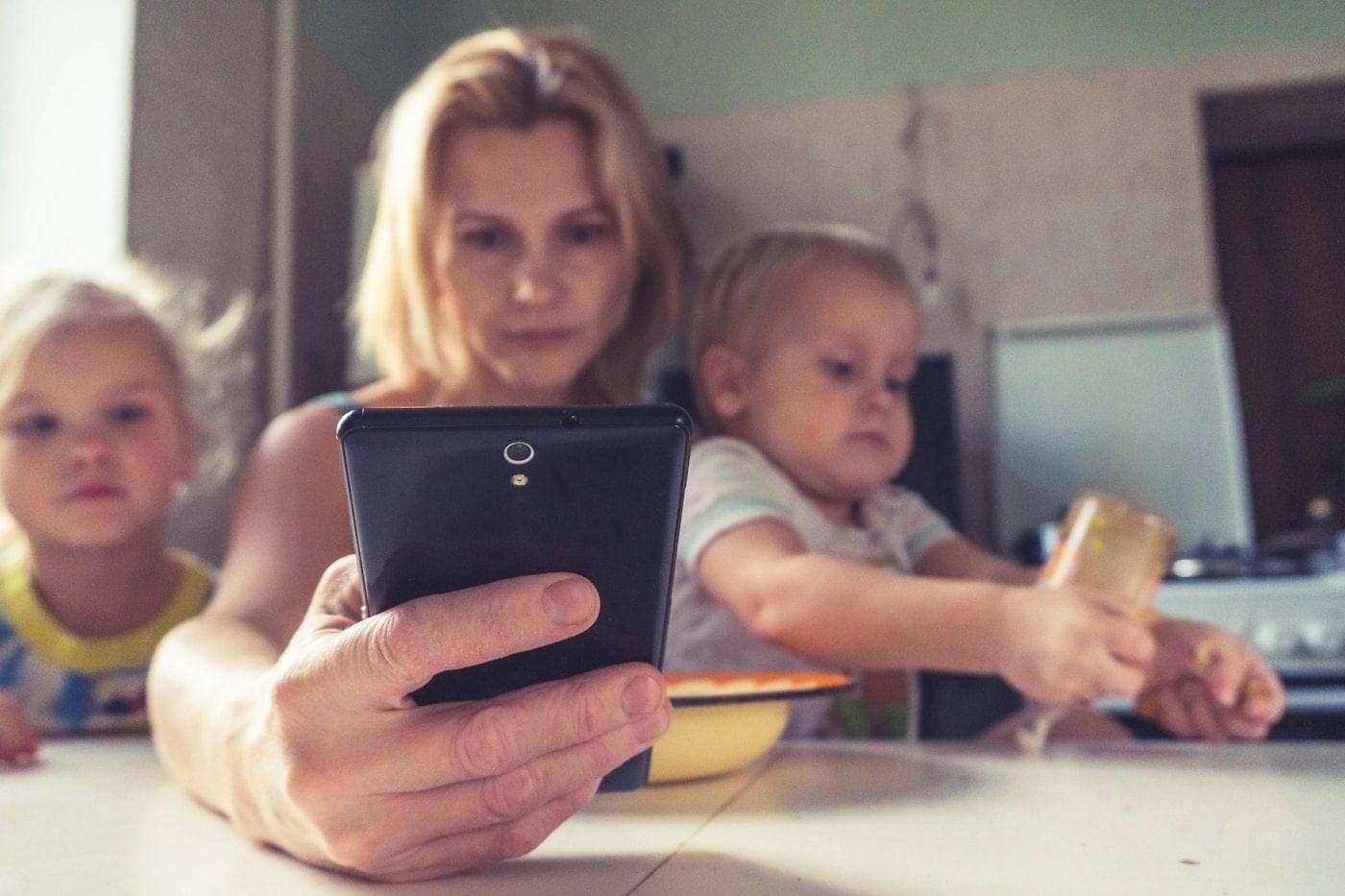
Philos doesn't use your photos or messages to train AI. Here's why that matters, especially for photos of children.

British parents posted about 1,500 photos of a child by their fifth birthday, and France has written children's image rights into law. How to share a childhood with care.
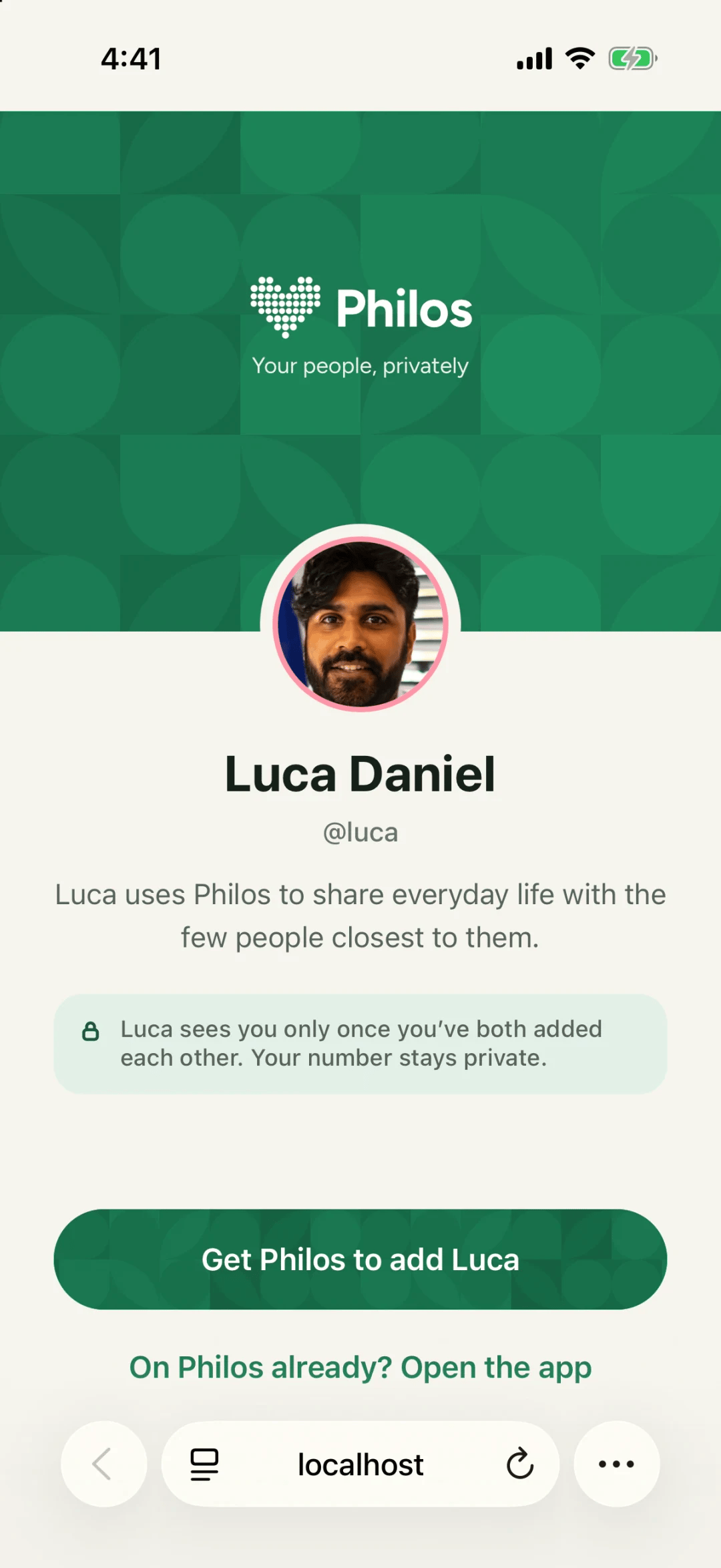
Your name and photo. Nothing else. Here's the page someone sees when they open your link before you've added each other.
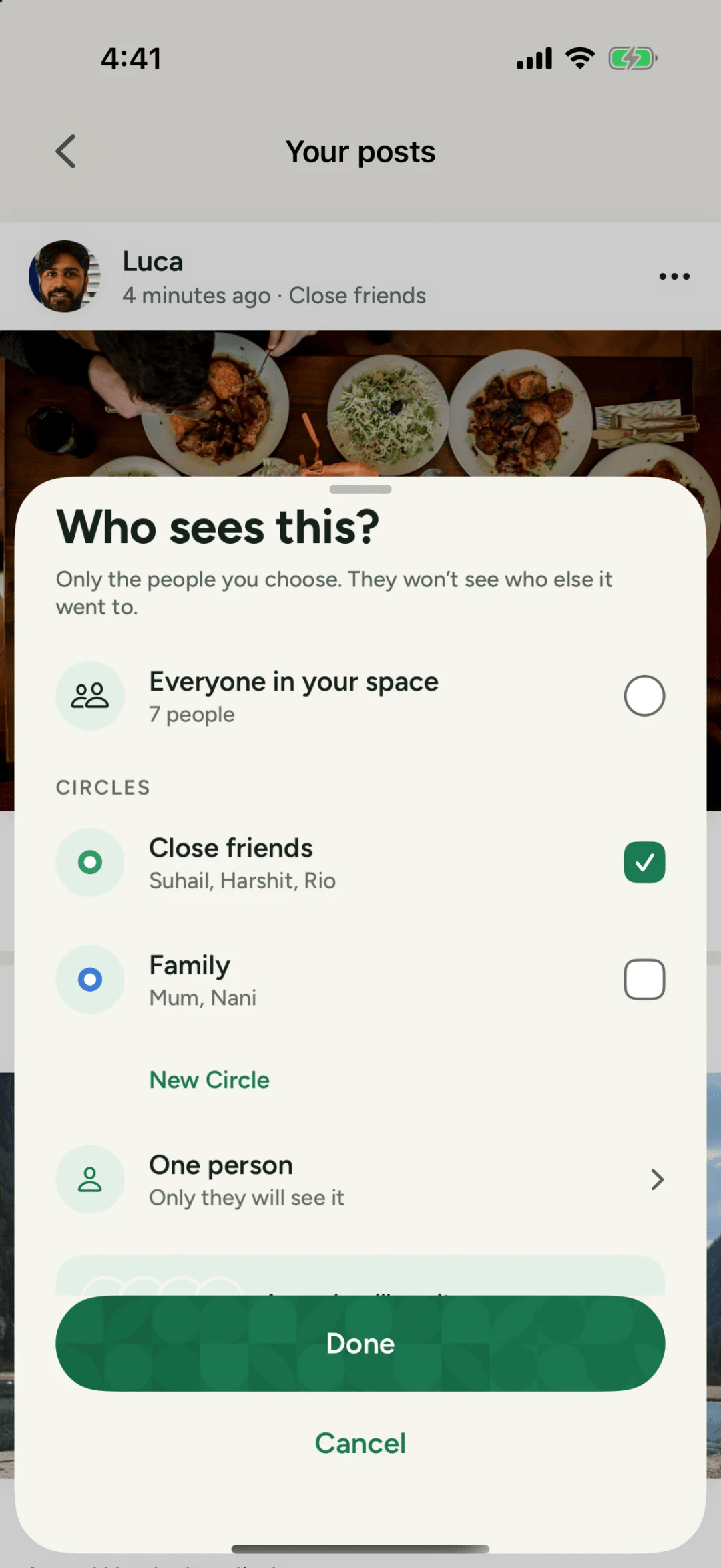
Everyone in your space, a Circle, or just one person. Here's how to pick who sees every post on Philos, and how to change your mind later.

A friend limit of 50, Circles, a Close Friends list, one photo a day. A short history of social apps that tried to be smaller, and what we learned from them.

A first loaf, a sunset, a line of words. How to share a Moment on Philos, choose who sees it, and see who loved it, all gone after a day.

Social media turned our photo albums into speeches in a public square. Why the room you share in changes what you share, and why Philos is built as a living room.
No ads, and your data is never sold. Scan the code with your iPhone camera to get Philos.
Get Philos
Scan, or download it here.